
Assistant Manager
Projects & Process Engineering | 14 Years of Experience
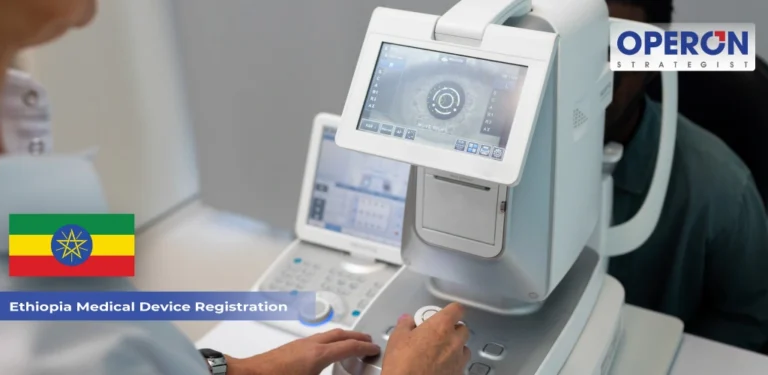
Ethiopia Medical Device Registration is the regulatory process through which medical devices are assessed and authorized for marketing in Ethiopia by the Ethiopian Food and Drug Authority (EFDA). EFDA evaluates the quality, safety, and performance of medical devices before they are marketed in the country.
For international medical device manufacturers, understanding EFDA requirements before entering the Ethiopian market can help reduce documentation gaps, regulatory queries, and avoidable delays.
Must Read: Global Opportunities for Medical Device Manufacturers
What Is Ethiopia Medical Device Registration?
Ethiopia Medical Device Registration, commonly addressed through EFDA’s medical device marketing authorization framework, applies to medical devices intended to be manufactured, imported, distributed, sold, or otherwise placed on the Ethiopian market.
EFDA’s framework covers both non-IVD and IVD medical devices and provides requirements relating to classification, grouping, technical documentation, quality systems, conformity assessment, and post-market obligations.
In simple terms: manufacturers need to demonstrate that their device meets applicable Ethiopian requirements for safety, performance, quality, and regulatory compliance before commercial marketing.
Who Regulates Medical Devices in Ethiopia?
The Ethiopian Food and Drug Authority (EFDA) is responsible for regulating medical devices in Ethiopia.
Its responsibilities include:
- Medical device marketing authorization
- Regulatory assessment
- Inspection and compliance
- Quality and safety oversight
- Post-market surveillance
- Import and distribution controls
EFDA’s current regulatory framework also includes dedicated guidelines for medical device classification, grouping, labeling, GMP, GDP/GSP, post-approval changes, and IVD registration.
Ethiopia Medical Device Classification
Medical device classification is an important first step because regulatory requirements depend on the device’s risk profile.
For general medical devices, EFDA uses a four-class risk-based system:
| Class | General Risk Level |
|---|---|
| Class I | Low risk |
| Class II | Low-to-moderate risk |
| Class III | Moderate-to-high risk |
| Class IV | High risk |
Classification can depend on factors such as:
- Intended purpose
- Duration of use
- Invasiveness
- Whether the device is active
- Whether it supports or sustains life
- Potential impact on patient safety
Important: Manufacturers should not rely only on examples from other countries. The applicable EFDA classification rules should be reviewed for the specific device. For IVDs, EFDA uses a separate Class A–D risk classification framework, with requirements addressed through its IVD-specific guidance
Key Requirements for Ethiopia Medical Device Registration
A typical EFDA application may require administrative, technical, quality, and regulatory documentation appropriate to the device and registration pathway.
1. Local Applicant or Representative
Foreign manufacturers generally need an appropriate Ethiopian local agent/representative to support the regulatory process.
EFDA’s guidance specifies requirements for the agency agreement and responsibilities of the local agent, including regulatory correspondence and distribution-related compliance.
2. Technical Documentation
The application should contain appropriate evidence demonstrating the device’s safety and performance.
Depending on the device, documentation may include:
- Device description
- Intended purpose
- Product specifications
- Risk management documentation
- Verification and validation information
- Clinical evidence, where applicable
- Manufacturing information
- Labeling and instructions for use
- Existing regulatory approvals
3. Quality Management System
A suitable quality management system is an important part of medical device regulatory compliance.
EFDA’s non-IVD registration guidance identifies valid quality-system evidence, including ISO 13485 certification where applicable.
4. Labeling and Instructions for Use
Medical device labeling should provide appropriate information for identification, safe use, handling, storage, warnings, and other applicable requirements.
EFDA also maintains dedicated medical device labeling guidance.
5. Post-Market Surveillance
Regulatory compliance does not end after approval. Manufacturers and local representatives must maintain appropriate post-market processes for monitoring device safety and addressing adverse events or other compliance issues.
Get a Regulatory Consultation.
Ethiopia Medical Device Registration Process
The registration journey can be summarized into the following steps:
Step 1: Determine Regulatory Status
Confirm whether the product is a medical device or IVD and identify the applicable EFDA pathway.
Step 2: Classify the Device
Determine the applicable risk class using EFDA’s classification requirements.
Step 3: Determine Device Grouping
Where multiple models, variants, or related products are being submitted, assess whether they can be grouped under EFDA’s applicable grouping criteria. EFDA has specific guidance covering medical device bundling/grouping.
Step 4: Appoint the Local Representative
Establish the appropriate agency relationship and ensure the local applicant has the required credentials.
Step 5: Prepare the Dossier
Compile administrative and technical documentation according to the applicable EFDA submission guideline.
Step 6: Submit and Undergo Regulatory Review
EFDA’s marketing authorization framework provides for application screening and technical assessment. Applicants are expected to select the appropriate pathway and submit complete documentation through the Authority’s electronic regulatory platform.
Step 7: Obtain Marketing Authorization
If the application successfully satisfies applicable requirements, EFDA grants the relevant marketing authorization.
Can Previously Approved Medical Devices Use a Reliance Pathway?
Yes, EFDA provides a pathway for certain devices already approved by Stringent Regulatory Authorities (SRAs) or prequalified by recognized international organizations. The EFDA guideline describes reliance on recognized regulatory approvals and WHO/UNFPA prequalification as a mechanism intended to improve efficiency and reduce duplication of regulatory assessment.
However, manufacturers should still review the specific EFDA requirements applicable to their product rather than assuming that an overseas approval automatically results in Ethiopian authorization.
Are Any Medical Devices Exempt?
EFDA has specific provisions and pathways for certain low-risk or exempt products. The applicable requirements depend on the product and its intended use.
Therefore, manufacturers should verify whether their device:
- Requires full marketing authorization
- Qualifies for a low-risk pathway
- Falls under an exemption
- Qualifies for a reliance or expedited pathway
EFDA currently publishes a dedicated guideline for marketing authorization of low-risk medical devices.
Common Challenges in Ethiopia Medical Device Registration
Manufacturers often face challenges such as:
- Incorrect device classification
- Incomplete technical documentation
- Inappropriate grouping of products
- Missing quality-system evidence
- Labeling inconsistencies
- Inadequate risk-management documentation
- Lack of an appropriate local representative
- Choosing the wrong regulatory pathway
Preparing the dossier according to the applicable EFDA guideline before submission can significantly reduce avoidable regulatory questions.
How Operon Strategist Can Help With Ethiopia Medical Device Registration
Operon Strategist supports medical device manufacturers with regulatory strategy and market-entry activities for international markets.
Our support for Ethiopia Medical Device Registration can include:
- EFDA regulatory pathway assessment
- Medical device classification support
- Regulatory gap analysis
- Technical documentation preparation
- QMS and ISO 13485 support
- Risk management documentation
Our broader regulatory services include CE Marking, FDA 510(k) consulting, CDSCO Medical Device Registration, and ISO 13485 QMS implementation.
Contact Operon Strategist today.
FAQ's
What is Ethiopia Medical Device Registration?
It is the regulatory process for obtaining EFDA marketing authorization for medical devices intended to be placed on the Ethiopian market.
Who regulates medical devices in Ethiopia?
Medical devices in Ethiopia are regulated by the Ethiopian Food and Drug Authority (EFDA).
Do foreign medical device manufacturers need a local representative?
Foreign manufacturers generally need an appropriate local agent/representative to support the Ethiopian regulatory and distribution process. EFDA’s guidance specifies requirements for the agency relationship.
Does ISO 13485 help with EFDA registration?
Yes. Quality-system evidence is an important component of the applicable regulatory requirements, and EFDA’s non-IVD guidance identifies ISO 13485 certification as one form of quality-system evidence where applicable.
Can FDA, CE, or other international approvals help?
Potentially. EFDA provides a reliance pathway for certain products approved by recognized SRAs and products prequalified by organizations such as WHO or UNFPA.
Assistant Manager – Projects & Process Engineering | 14 Years of Experience
Medical device manufacturing professional specializing in manufacturing plant feasibility, facility and cleanroom planning, process development, machinery selection, and equipment qualification (DQ, IQ, OQ, PQ). His expertise includes project cost estimation, procurement planning, and process optimization in alignment with ISO 13485:2016.