
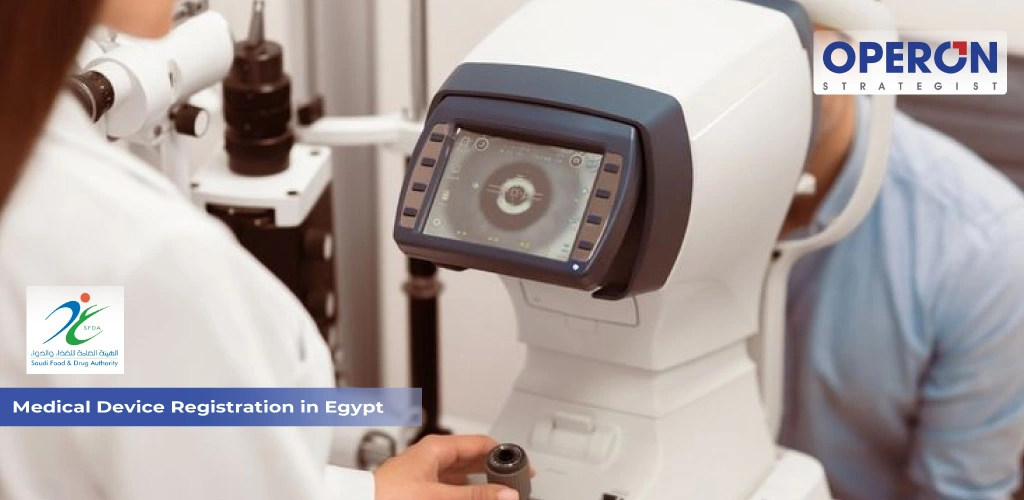
Medical Device Registration in Egypt
As the second-largest healthcare market in the Middle East and North Africa (MENA) region, Egypt offers immense opportunities for global medical technology manufacturers. Because the local healthcare infrastructure relies heavily on imported technology, successfully navigating Medical Device Registration in Egypt is a highly lucrative step for business expansion.
This guide breaks down the regulatory landscape, classification rules, documentation requirements, and the step-by-step process to secure market approval from the Egyptian authorities.
Must Read: Medical Device Import to Russia
Register your Medical Device in Egypt
The Regulatory Authority: Egyptian Drug Authority (EDA)
The Egyptian Drug Authority (EDA) is the sole regulatory body responsible for evaluating and approving medical devices, IVDs, pharmaceuticals, and cosmetics. Operating under frameworks like Law No. 151 of 2019 and the foundational Egyptian Medical Device Law No. 10 of 2003, the EDA ensures all imported and locally manufactured devices meet strict safety, quality, and efficacy standards.
A major advantage of the EDA regulatory framework is its reliance on reference markets. If your medical device already holds authorization in regions like the EU (CE Marking), the US (FDA), Canada, Japan, or Australia, you can leverage those prior approvals to streamline your EDA medical device registration.
Device Classification in Egypt
Egypt does not use a standalone local classification scheme. Instead, the EDA classification system strictly aligns with the risk-based tiers of the EU Medical Devices Regulation (EU MDR) and In Vitro Diagnostic Regulation (EU IVDR).
| Risk Level | Medical Device Class | IVD Class | Examples |
| Low Risk | Class I | Class A | Bandages, manual wheelchairs, non-sterile examination instruments |
| Low-Medium Risk | Class IIa | Class B | Diagnostic ultrasound systems, surgical gloves, hearing aids |
| Medium-High Risk | Class IIb | Class C | Ventilators, infusion pumps, dialysis equipment |
| High Risk | Class III | Class D | Pacemakers, heart valves, total joint replacements |
The Egyptian Registration Holder (ERH)
If your manufacturing company does not have a localized physical presence in Egypt, you are legally required to appoint an Egyptian Registration Holder (ERH).
Your ERH acts as your authorized local representative and importer. Crucially, the ERH effectively “owns” the registration in Egypt. Because medical device licenses cannot be transferred between entities, changing your ERH requires a complete re-registration of the product. Selecting a reliable, experienced ERH from the start is the most important strategic decision you will make for your Egypt market entry.
Must Read: Medical Device Regulatory Requirements in Lebanon
Contact our regulatory experts
Need help determining your device classification or navigating the MeDevice portal?
Step-by-Step Medical Device Registration Process
The EDA has modernized its submission process, requiring all applications to be routed through its mandatory electronic platform, the MeDevice portal (launched in July 2021).
Appoint an ERH: Select a licensed local entity to act as your representative.
Determine Classification: Classify your device according to EU MDR rules. The EDA MeDevice portal also features an AI-powered classification tool to assist with complex devices.
Compile the Technical Dossier: Gather all required administrative and technical documentation. Standard requirements include:
A valid ISO 13485:2016 certificate (mandatory for QMS verification).
Free Sale Certificate (FSC) or Certificate of Foreign Government (CFG).
Declaration of Conformity and CE Certificate (if applicable).
Clinical evaluation reports, labeling (English and Arabic), and Instructions for Use (IFU).
Submit via MeDevice Portal: Your ERH uploads the comprehensive dossier to the EDA portal.
Technical Review & Approval: The EDA conducts an administrative screening (usually 3–5 days for sterile devices) followed by a full technical and scientific committee review.
Timelines and License Validity
Standard Review Timeline: 6 to 9 months, depending on the risk class and documentation completeness.
Fast-Track Pathway: Introduced for eligible CE-marked or FDA-cleared devices, reducing the review timeline to approximately 3 to 4 months.
Validity: One of the strongest commercial advantages of Egypt medical device registration is the license validity. Approved medical devices receive a 10-year marketing authorization, while IVD licenses are valid for 5 years.
How Operon Strategist Can Help
Operon Strategist specializes in simplifying complex global regulations. For manufacturers targeting the Egyptian market, our comprehensive consultancy ensures a frictionless approval process:
Classification & Gap Analysis: We accurately classify your device and audit your existing technical files against current EDA requirements.
QMS Compliance: We assist in implementing and maintaining ISO 13485:2016 standards required for Egyptian market entry.
ERH Coordination: We help you identify and qualify a reliable Egyptian Registration Holder to protect your long-term commercial interests.
MeDevice Portal Management: Our regulatory writers compile, format, and structure your dossier for rapid acceptance on the EDA’s digital platform.
Lifecycle Management: We handle post-market surveillance, vigilance reporting, and license renewals across the 10-year validity lifecycle.
Contact our regulatory experts for seamless, end-to-end EDA registration services.
Ensure Regulatory Compliance for Your Device
Get Your Medical Device Market-Ready for Egypt with Expert Regulatory Support
FAQ's
Is ISO 13485 mandatory for medical device registration in Egypt?
Yes, the EDA requires all manufacturers to hold a valid ISO 13485:2016 certificate to satisfy local Quality Management System (QMS) requirements.
Can I transfer my medical device license to a different distributor in Egypt?
No. The Egyptian Registration Holder (ERH) legally owns the registration. If you change your ERH, you must submit a new registration application and reprint product labeling.
How long is a medical device registration valid in Egypt?
Medical device marketing authorizations are valid for 10 years, which is currently the longest validity period in the MENA region. IVD licenses are valid for 5 years.
Does Egypt recognize FDA clearance or CE Marking?
Yes. The EDA heavily leverages reference markets (EU, USA, Canada, Japan, Australia). Having FDA clearance or a CE Mark can qualify your device for a fast-track review process.
How long does the EDA review process take?
Standard registration takes 6 to 9 months. However, if your device qualifies for the fast-track pathway, approval can be secured in 3 to 4 months.